Lo-Manthang Schoolroom Project, Upper Mustang, Nepal
Following a commitment confirmed at the Club’s General Meeting to support classrooms at a monastery school at Lo Manthang, Upper Mustang, Nepal, President Carl Segal, arranged for a sum of AUD$4,000.00 to be telegraphically transferred direct to the account of the School in Nepal.
Background
Lo Manthang is a forbidden feudal kingdom located high in the remote regions of northern Nepal, a sparsely populated region where an ancient Tibetan culture still reigns.
The population of about 7000 is scattered amongst a series of 28 small communities and nomadic tribes.
Since the Chinese occupation of Tibet (1959) which used to be the source of ancient Mustang’s culture, the close cultural and religious ties have been totally severed. This in turn, has resulted in a negative impact on the prevailing traditions due to the people being exposed to the totally alien culture of the present Government.
The Project
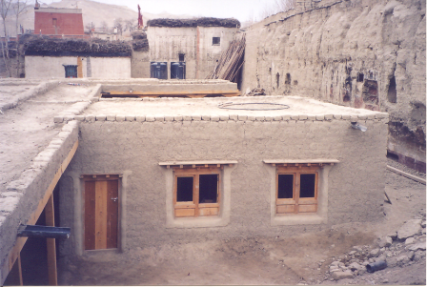
The principal of the school welcomed the opportunity to build two more classrooms onto the school, using the teachers and students as labor to minimize cost, and the school principal said, “To build an element of ownership and pride into the activity”. “The need is to expand teaching space as there are far more potential students in Lo Manthang then there are facilities to teach them”.
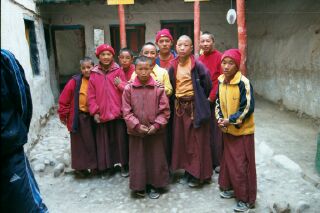
There was only capacity to teach 55 Students at Lo Manthang’s only school.
The principal also stated “The generosity of The Rotary Club of Rose Bay, has enabled young people who might not otherwise receive any education at all to attend school Previously uneducated children of upper Mustang will now have the opportunity to learn more about their own cultural heritage and the Tibetan language as well as English and Nepali”.
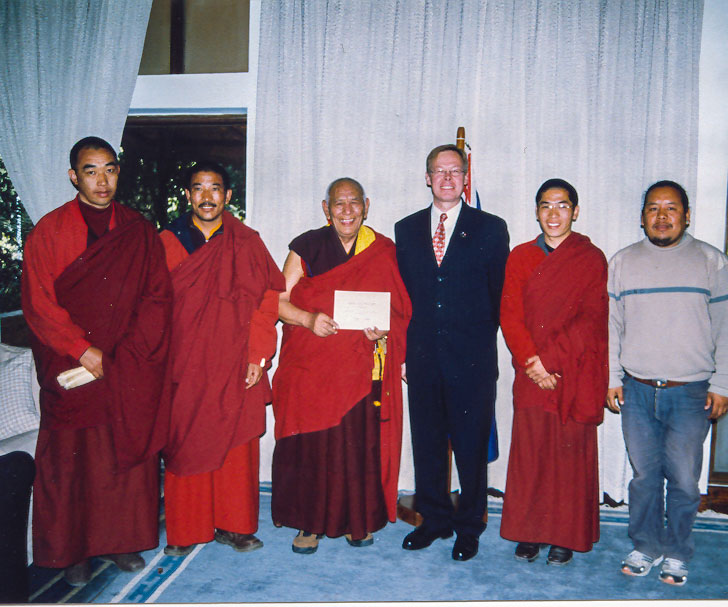
The new Ambassador to Nepal Mr Keith Gardener officially handed over the money at a small ceremony earlier this year to the Abbot of the Tsechhen Shedrub Ling Mon Gon Lobara (Great Compassimete Sakyapa Monastic School).
Building commenced in May of that year, when the snow thawed and access to this remote area by foot was again possible. The School regularly relocates to Kathmandu the capital of Nepal during the cold winter months.